
Troubleshooting conveyor problems in a port
Localization of noise sources in rollers and drive units of a running conveyor using a NAC-PA camera and analysis of recordings in Aura SVS.
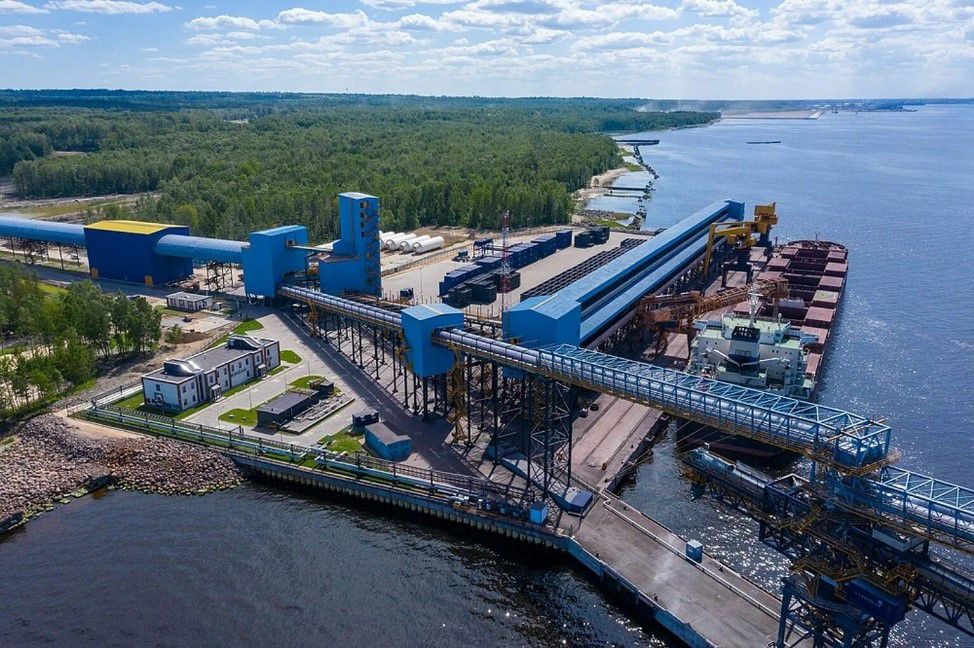
What does conveyor downtime lead to?
Estimates for the fertilizer transshipment terminal include lost revenue, emergency repairs, transport delays, and the use of additional equipment. The actual cost depends on the terminal's occupancy and contract terms; these are not the measured losses of the surveyed facility.
About the project
- Client
- Multifunctional port terminal of the logistics holding
- Industry
- Transport
- Object
- Conveyor line
- The task
- Looking for signs of mechanical failure
- Equipment
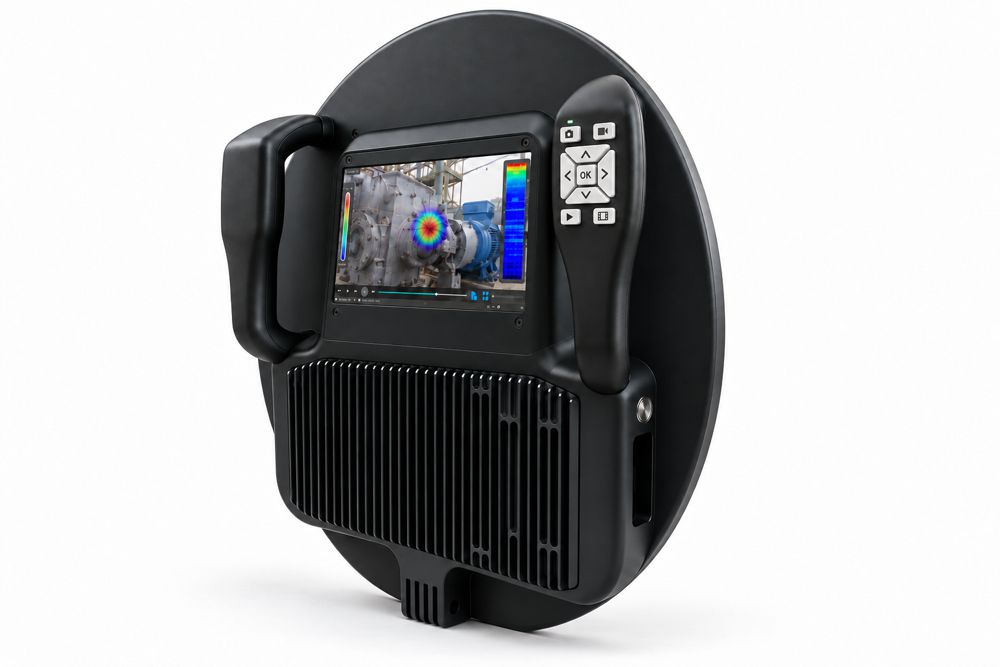
- NAC-PA
- Software
- Aura SVS
The task
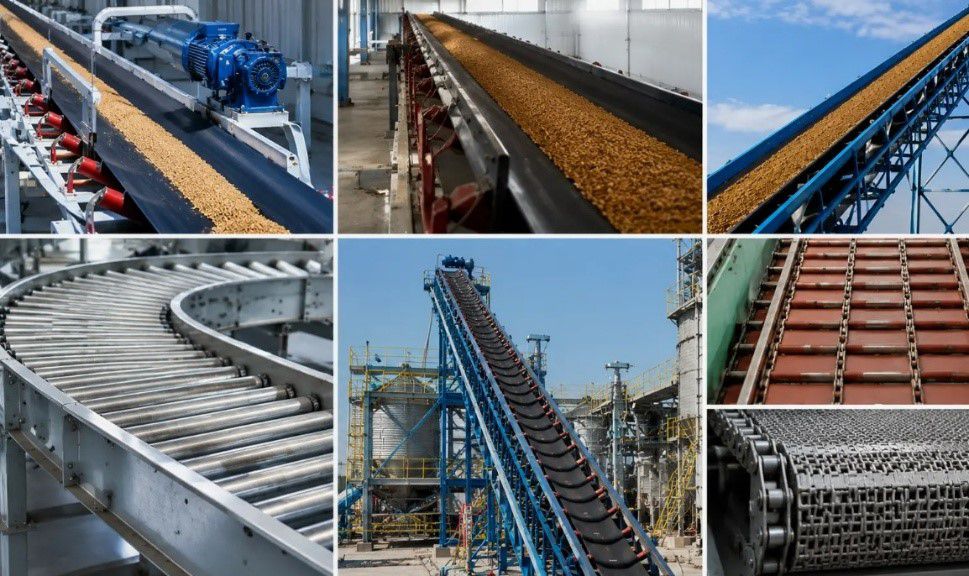
Inspect conveyor rollers, drums, and drive assemblies for signs of wear, jamming, and friction. On a long line with high background noise, it's important to identify the specific source of the noise and its location on the equipment.
The survey is carried out on a running conveyor from accessible, safe positions to record sounds generated under load.
The decision
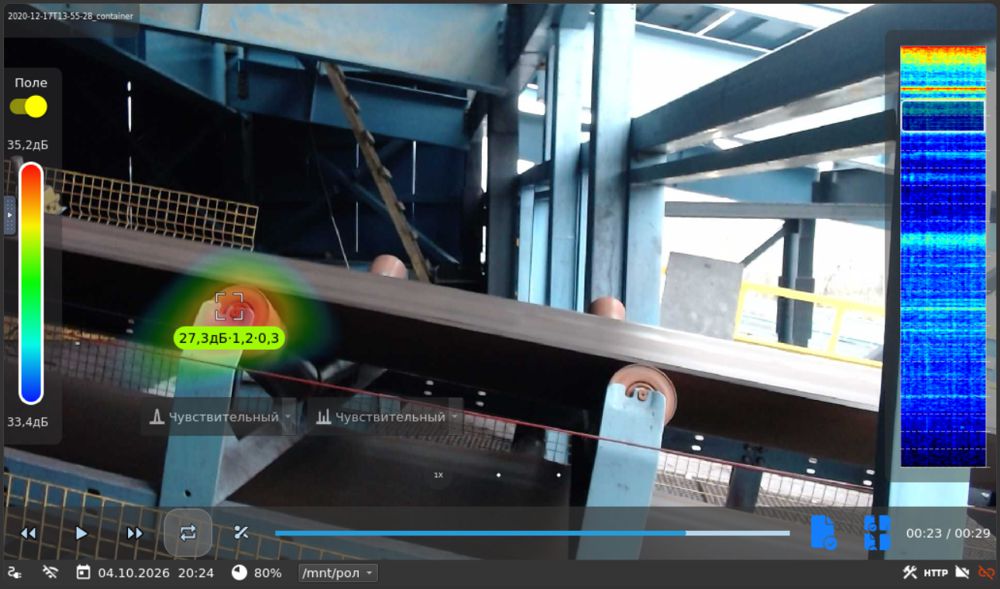
The NAC-PA acoustic camera and Aura SVS were used for the survey. The acoustic map links the sound source to a specific node, and the saved recordings allow for a detailed study of its operation and the preparation of a report.
The analysis range is selected based on the nature of the sound and background interference. The identified sources serve as the basis for targeted inspection of rollers, bearings, and drive mechanisms.
How is the examination carried out?
Examination route
Drive and tension stations, transfer units, and roller supports are identified. Access is agreed upon and the line's operating mode is established.
Search for sound sources
The units are examined sequentially, the analysis range is selected, and records are saved with reference to the conveyor section.
Analysis of records and report
Aura SVS compares acoustic maps and sound character, adds comments, and marks nodes for further verification.
Checking and re-checking
After verifying the condition of the components, repairs are planned. A repeat inspection helps assess changes after maintenance.
Result of the examination
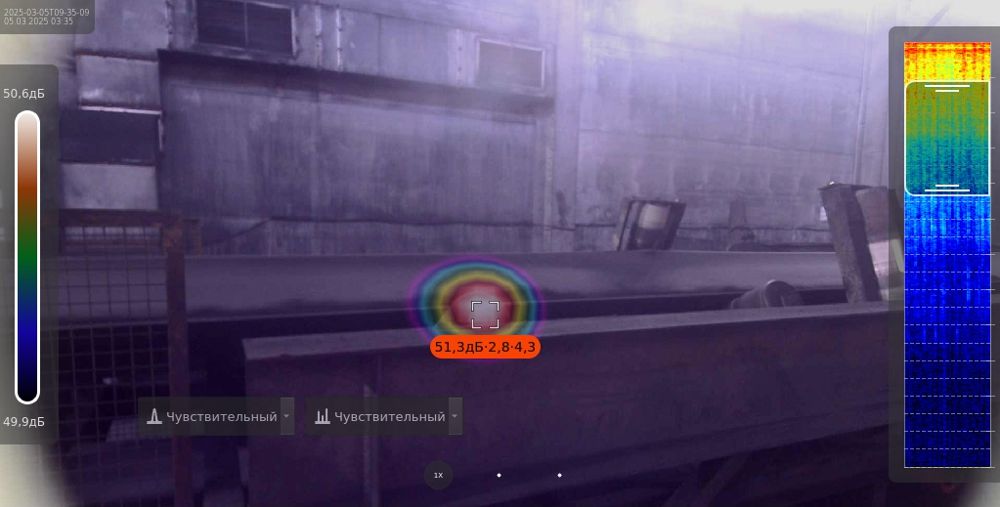
The acoustic recording localizes the sound source to a conveyor roller. This location allows the component to be identified for inspection and included in the maintenance schedule.
Recordings and acoustic maps are saved for analysis, report preparation, and comparison with the results of a follow-up examination. The cause of the noise is determined during the node inspection.
Outlook: Continuous monitoring
For critical ship-loading and mainline lines, periodic inspections can be supplemented with permanent acoustic monitoring. This helps track changes in sound between inspections and identify areas requiring attention.
The location of cameras and event recording conditions are determined taking into account the line design, load and background noise.
Where applicable
Ports and transshipment terminals
Grain, coal and mineral fertilizer conveyors, ship loading lines.
Mining industry
Rollers and drives for ore and concentrate transportation lines.
Metallurgy
Conveyors for feeding charge, coke, pellets and agglomerate.
Cement and mineral industry
Lines for moving limestone, clinker, chalk and gypsum.
Chemical Industry
Conveyor units for the production and handling of fertilizers.
Energy
Roller supports and drives for fuel supply conveyors at thermal power plants and state district power plants.
Pulp and paper industry
Conveyors for wood chips, bark and fibrous materials.
Building materials and non-metallic materials
Conveyors for quarries and crushing and screening plants.
Rail transport and logistics
Transporters for cargo terminals and handling complexes.
Equipment and Software
Acoustic camera for examinations and software for analyzing recordings and preparing reports.

Need to inspect the conveyor?
Tell us about your line and operating conditions—we'll discuss the survey and select the right equipment for acoustic diagnostics.
Discuss Your Needs
Leave your contact details, and we’ll get in touch within one business day to discuss your needs and find the right solution.