
Checking the condition of the valves in the pressing department
How a stationary acoustic system helps identify signs of developing defects in hydraulic press units and monitor the duration of production cycles.
Equipment emergency downtime period.
Potential losses due to production stoppage.
Cost of repairs, spare parts and oil changes.
Estimated potential losses from open sources, as provided in the project materials. Actual costs depend on the equipment and the consequences of failure.
About the project
The challenge: to detect signs of defects before valve failure.
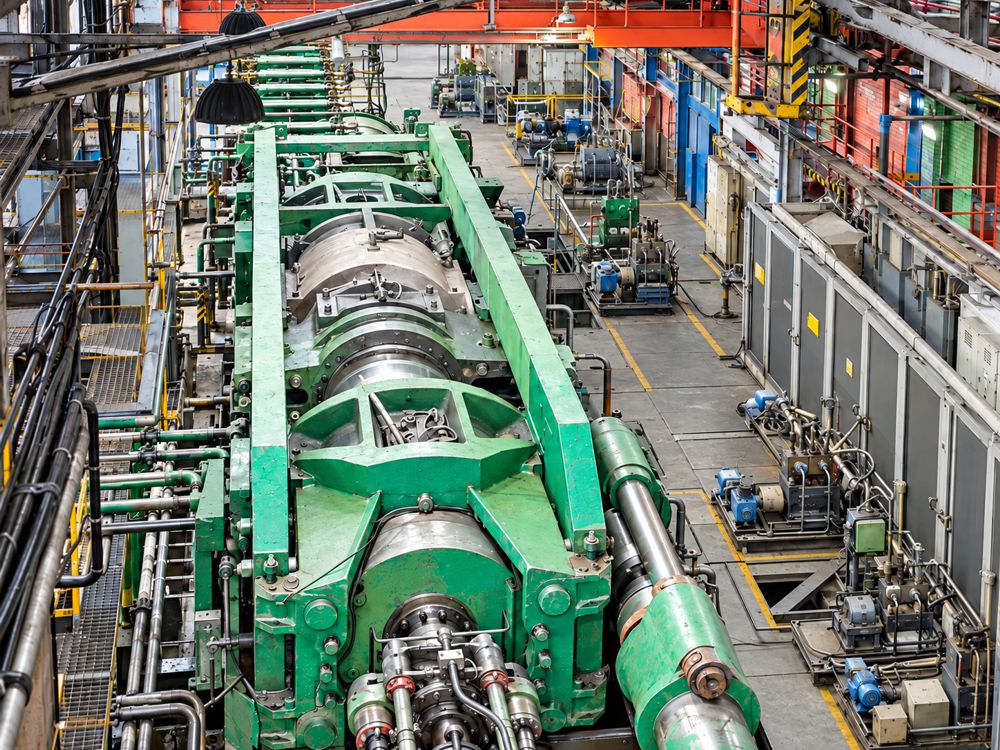
An aluminum processing plant needed to establish non-contact monitoring of pressing equipment to detect signs of developing defects that could lead to hydraulic valve failure.
Failure or separation of valve components due to impact loads, wear, or contamination of the hydraulic system can shut down the entire pressing line. The project's goal was to obtain data for timely component inspection and reduce the risk of unscheduled downtime and repairs.
Which nodes were included in the control?
Return cylinders, distributors, plungers, container distributor and die feed mechanism.
Solution: Continuous acoustic monitoring
A system of NACEx-SA fixed acoustic cameras and Aura AcoMS software was installed at the facility. It enables monitoring of selected equipment components and processing of acoustic monitoring data.
Cameras provide contactless monitoring of selected nodes, and Aura AcoMS is used to set up control points and work with monitoring data.
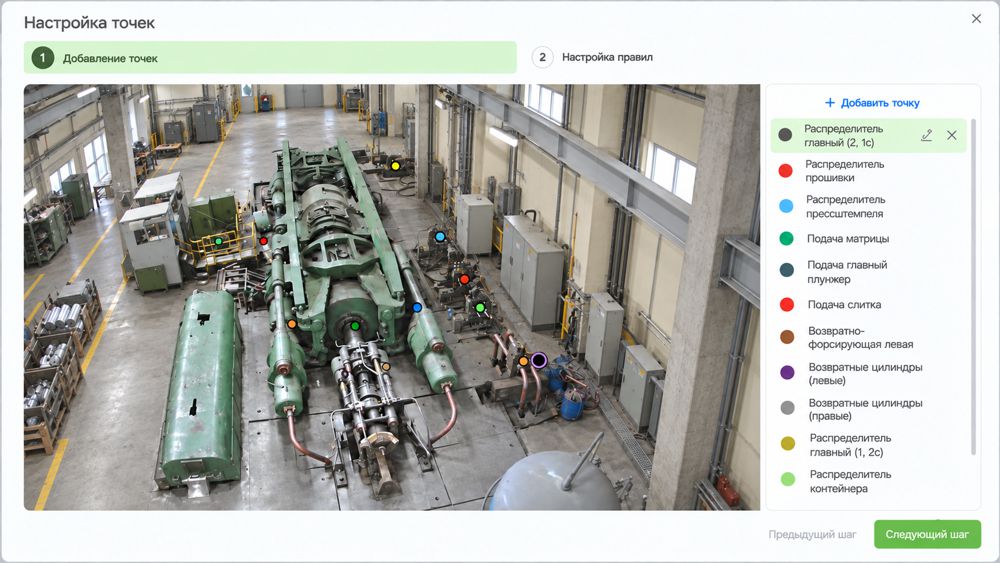
Process: from site survey to system launch
We determined the locations for acoustic cameras and the available power supply parameters at the facility.
We agreed on data transmission routes, the possibility of connecting to the enterprise network, the placement of server equipment, and access to it.
We prepared a design for the placement of components of the continuous monitoring system and agreed on it with the customer.
After the project was approved, the equipment was installed and the system was commissioned.
Result: data on the state of nodes and work cycles
Monitoring the status of nodes
A continuous acoustic monitoring system for selected hydraulic components has been launched at the facility. The monitoring data helps identify areas requiring inspection.
Cycle duration control
After setting up the system, it became possible to track the duration of pressing, reloading, and process downtime—parameters that affect the cost of production.
Practical effect: Information about the condition of components and the duration of work cycles helps to plan maintenance in advance and identify the causes of deviations in the press operation.
Where else can this approach be applied?
This approach can be considered for production facilities using hydraulic and mechanical presses. The feasibility of use, system composition, and inspection points are determined based on equipment inspections and their operating modes.
Stamping of body panels, chassis parts, transmission components and brake pads; molding of polymer and composite interior parts.
Forming of critical wing elements, propulsion system components and skin load-bearing panels.
Forging, hot stamping, deep drawing of sheet metal, profile bending, cutting of complex contours, as well as pressing of bearings, bushings and shafts.
Phase separation, compaction, compaction and briquetting; preparation and shaping of composites, blank cutting, crimping, rolling and batch pressing.
Pressing metal powders into high-precision blanks for subsequent sintering; tableting of powdered substances and medicinal mixtures.
Gluing layers of veneer in the production of plywood, production of wood panels.
Compression molding of polymers, creation of structural products from glass and carbon fiber.
Areas for compacting and packaging secondary raw materials: waste paper, polymer waste, aluminum and tin cans, textiles.
Hardware and software
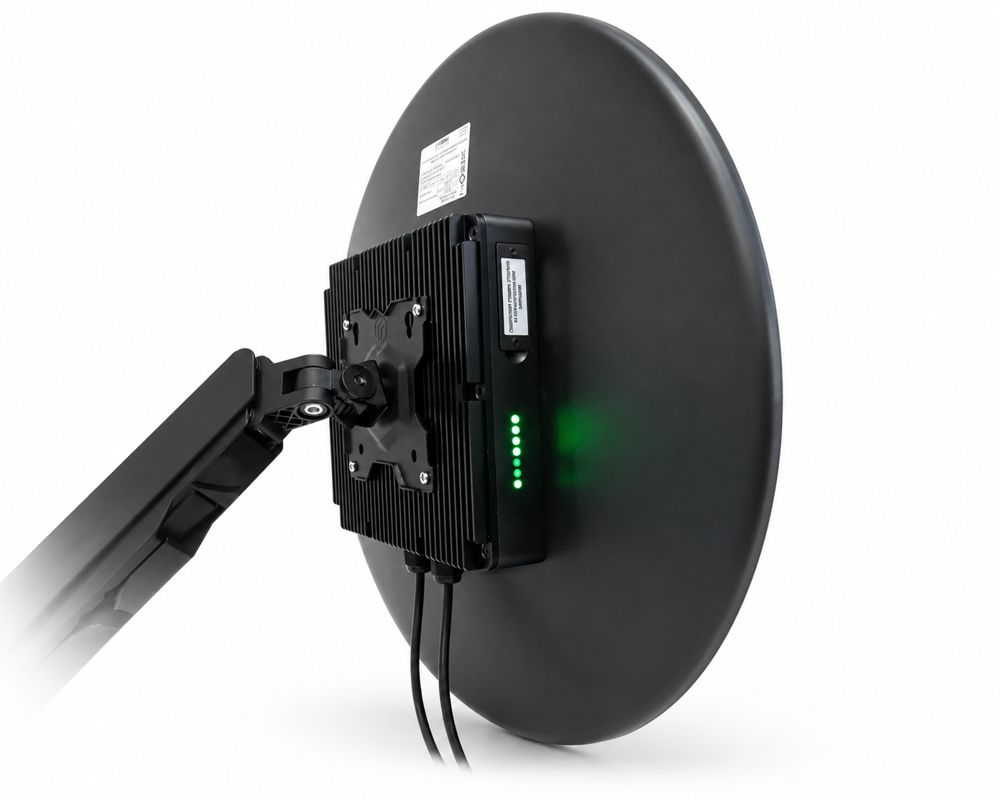
NACEx-SA
Stationary acoustic camera for monitoring equipment and localizing sound sources.
More about the camera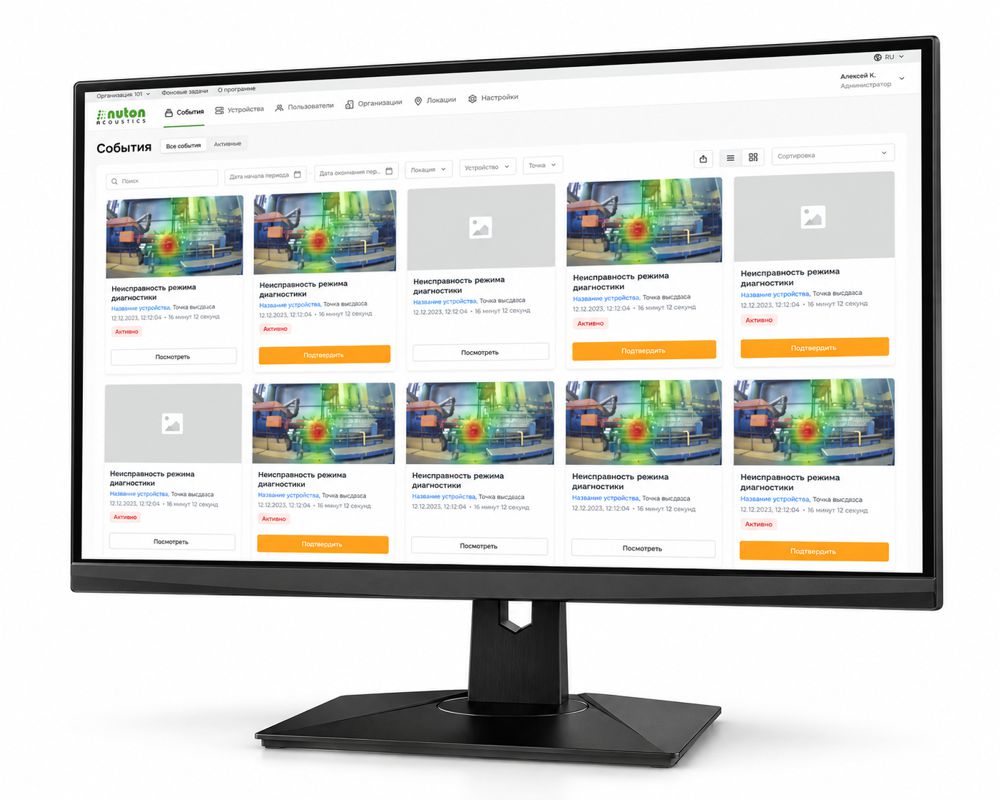
Aura AcoMS
Software for setting up and operating a continuous acoustic monitoring system.
More about the programNeed to control pressing equipment?
Tell us about your facility—we'll discuss monitored nodes, camera placement, and system connection.
Discuss Your Needs
Leave your contact details, and we’ll get in touch within one business day to discuss your needs and find the right solution.