
Finding noise sources in buildings
Detecting sound transmission through building envelopes: visualization of the acoustic field with the NAC-PA camera and analysis of stored materials in Aura SVS.
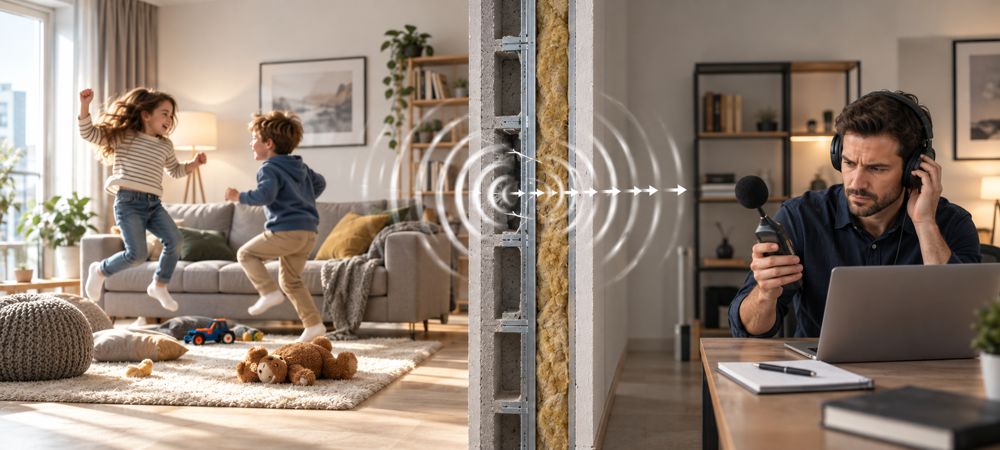
What can insufficient sound insulation lead to?
These are approximate scenarios based on source data, not actual losses at the surveyed facility or verified savings. Calculations depend on assumptions regarding noise impact, revenues, and occupancy; the results from different scenarios are not cumulative.
About the project
- Client
- Research Institute
- Industry
- Construction industry
- Object
- Enclosing structures and building openings
- The task
- Search for noise sources and sound transmission areas
- Equipment
- NAC-PA
- Software
- Aura SVS
Task: determine where the sound goes
When studying sound insulation, it was necessary to localize the areas through which sound from the adjacent room entered the area under study. Particular attention was paid to doorways, structural joints, and areas where they adjoin.
Knowing the location of such areas helps to clarify the scope of further inspection and select noise reduction measures. The cause may be related to joints, leaks, or sound transmission through adjacent structures.
The purpose of acoustic visualization is to show the spatial location of sources and areas of increased sound radiation for subsequent examination.
Solution: Visualizing Sound Transmission
A portable NAC-PA acoustic chamber and Aura SVS software were used for the survey. A noise source was placed in an adjacent room, and the enclosing structures were inspected from the room being surveyed.
The acoustic map helped identify areas of increased sound emission and associate them with building elements. Recordings were saved for detailed analysis and report preparation.
Visualization complements sound insulation measurements: it helps to localize problem areas, and a quantitative assessment of the structure's characteristics is carried out using the appropriate measurement methodology.
How was the examination conducted?
Noise source in an adjacent room
A sound field was created on the other side of the structure being examined and testing zones were defined.
Scanning of structures
The NAC-PA camera inspected the walls, doorway and areas where building elements adjoin.
Highlighting problem areas
Using the acoustic map, we identified areas of increased radiation and recorded their position on the image.
Recordings and reporting in Aura SVS
The saved materials were used to study the acoustic picture and prepare a report with reference to the structures.
Result: areas for testing have been localized
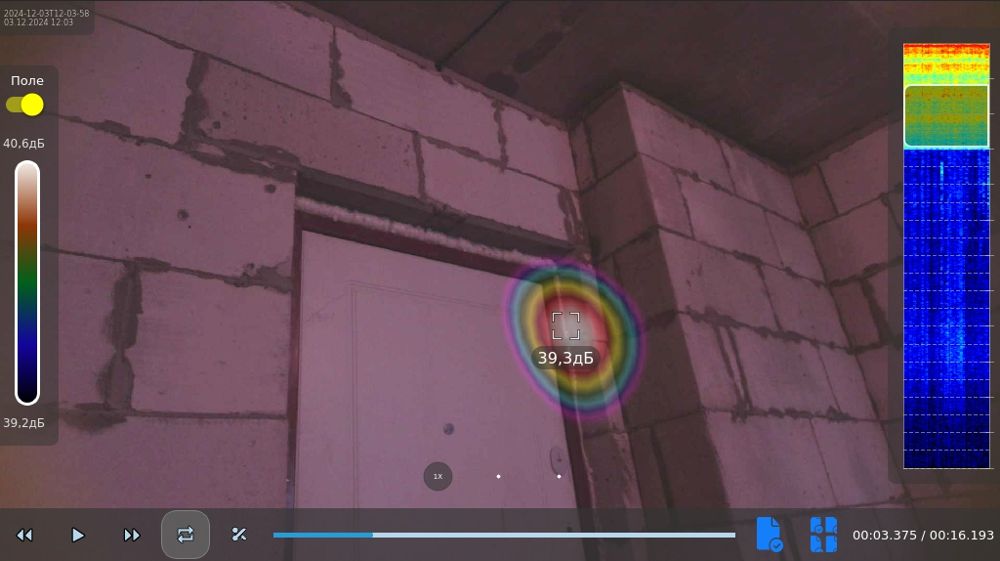
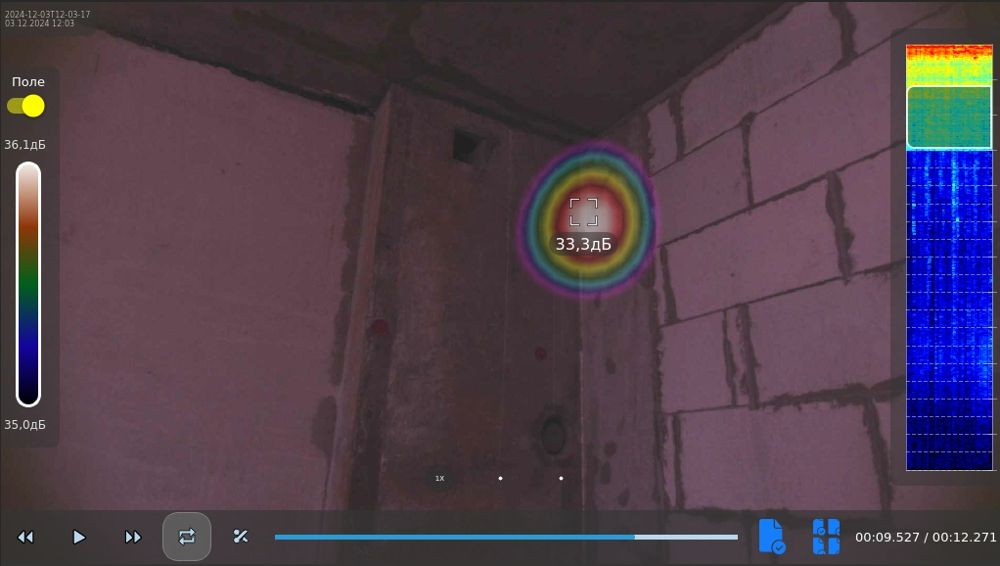
The presented survey materials show areas of increased sound radiation near the doorway and in the area where the wall adjoins the reinforced concrete structure.
Linking the acoustic map to the image helps specialists determine which joints and connections need to be inspected. This data can be used to select localized soundproofing improvements and for subsequent monitoring of completed work.
Where applicable
Acoustic imaging can be used to locate noise sources and transmission points on other objects.
Transport and road infrastructure
Study of transport noise sources and their contribution to the acoustic environment near buildings.
Public utilities and engineering networks
Search for noise sources from pumps, ventilation, air conditioning and elevator equipment.
Construction and dismantling
Localization of the noisiest mechanisms and operations to select measures to reduce the impact on neighboring buildings.
Urban energy and networks
Investigation of noise from transformers and auxiliary equipment near residential buildings.
Trade, catering, and cultural and leisure facilities
Search for ways of noise transmission through doors, windows, ventilation and enclosing structures.
Environmental monitoring and urban planning
Identification of urban noise sources for selecting locations for installation of screens and other protective measures.
Law enforcement and supervisory activities
Localization of sources when analyzing noise complaints and planning further measurements.
Housing and communal services and property management
Inspection of joints, openings and utility inputs during acceptance, repair and operation of buildings.
Equipment and Software
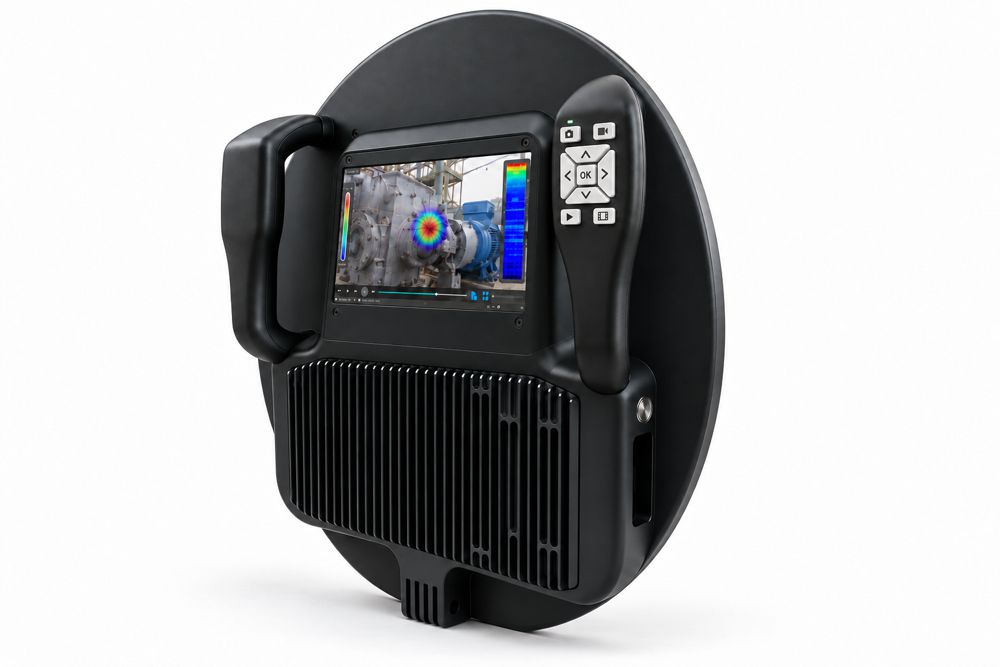
Acoustic camera for examinations and software for analyzing recordings and preparing reports.

Need to find the source of noise in a building?
Tell us about the property and the nature of the noise—we'll discuss an on-site inspection or renting a camera for self-inspection.
Discuss Your Needs
Leave your contact details, and we’ll get in touch within one business day to discuss your needs and find the right solution.