
Identification of defects in the operation of pumping stations
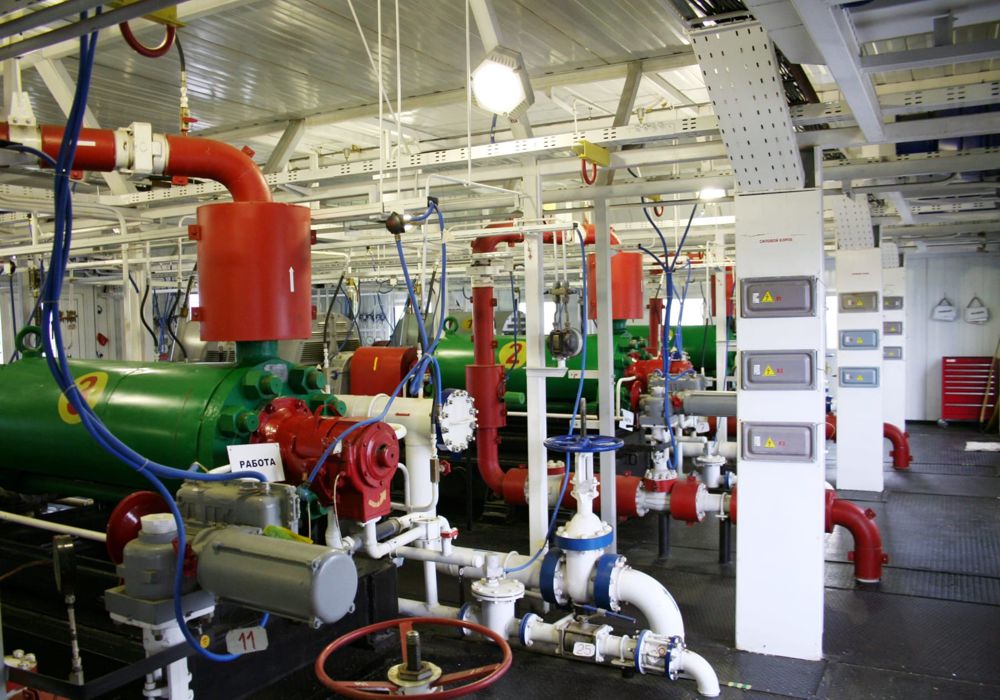
Non-invasive survey of a modular cluster pumping station and external pumping station: localization of sound sources using the NAC-PA camera and analysis of the results in Aura SVS.
What can pump failure lead to?
Hypothetical scenarios based on rough estimates from open sources cited in the case materials. The extent of losses depends on production conditions, the availability of backup pumps, and the duration of the outage.
About the project
- Client
- Oil and gas production company
- Industry
- Oil and Gas Industry
- Object
- Block-type pumping station and external pumping station
- Format
- Walk-arounds with a portable acoustic camera
- Equipment
- NAC-PA
- Software
- Aura SVS
Objective: To identify signs of pump malfunctions
An additional non-invasive diagnostic method was required at pumping stations. The vibration and thermal imaging methods used were insufficient to fully address the problem of detecting developing defects in the field.
Pumps operate in conjunction with electric motors, couplings, and connected pipelines. Vibrations from adjacent components and resonances make it difficult to isolate the signal from a specific source. The overall thermal background of the machine room also complicates the interpretation of survey results.
It was necessary to identify sources of unusual sounds on operating equipment, save the results and use them for subsequent analysis and maintenance planning.
Solution: Sound Visualization
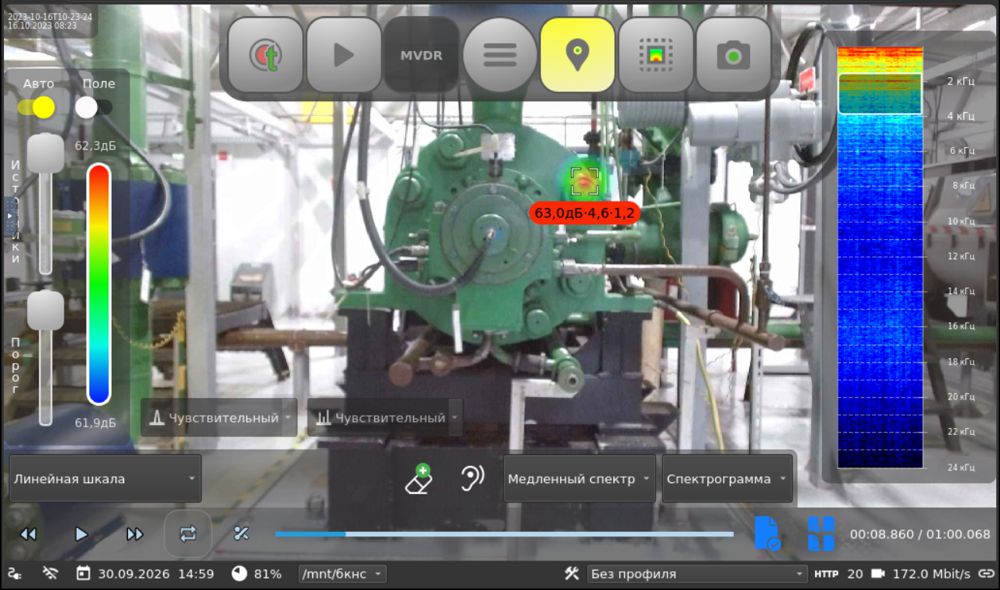
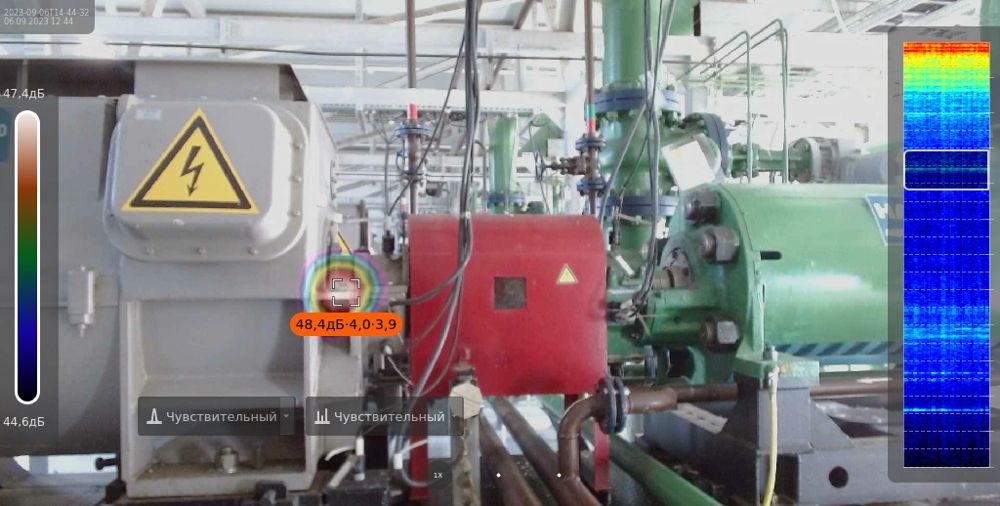
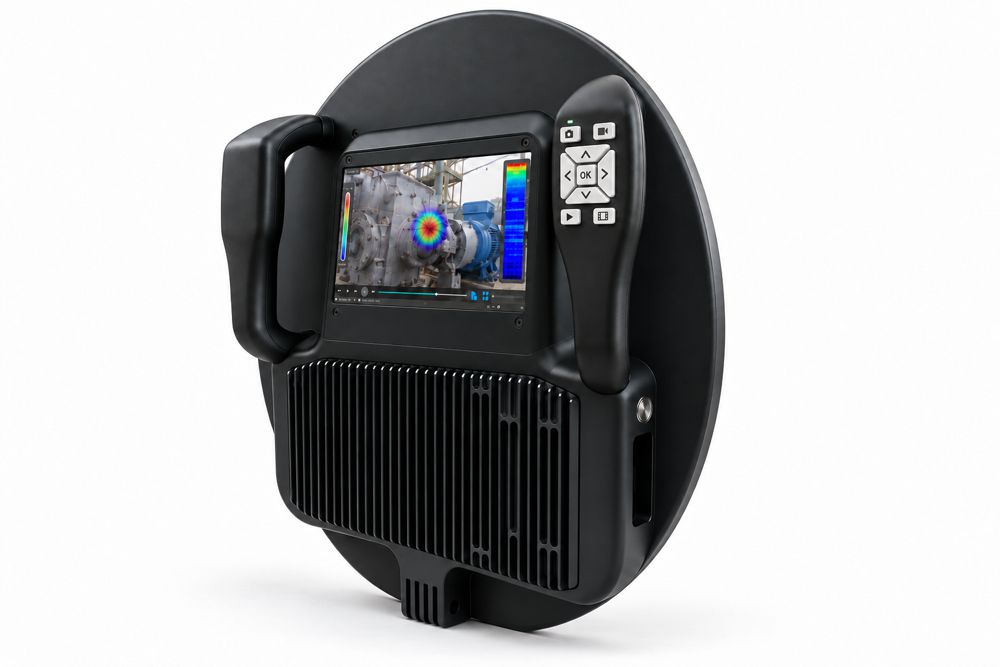
A portable acoustic camera, NAC-PA, was used for the survey, along with Aura SVS software. The camera helped localize sound sources within the equipment image, while the software analyzed the stored data and automatically generated a report.
During the inspections, attention was paid to whistling, rattling, beating, and unusual humming sounds. Comparing the acoustic pattern with the unit's operating characteristics helped identify components for further inspection.
How was the examination conducted?
Inspection of operating units
The operator surveyed the pumping equipment with the NAC-PA camera and observed the acoustic map in real time.
Searching for areas to be tested
The location of atypical sounds was used to determine nodes requiring specialist attention.
Operator Notes Recordings
Acoustic data were stored in container files and supplemented with notes for subsequent analysis.
Processing results in Aura SVS
Trend, acoustic excess, and spike analysis were used for preliminary assessment of defect signs and their development. A report was prepared based on the stored data.
Result: data for maintenance planning
The survey allowed us to localize the sources of unusual sounds and preserve acoustic recordings with operator notes. Data analysis provided the basis for a preliminary assessment of malfunction signs and planning inspections and repairs.
The specialists' knowledge of the pumping equipment's features helped interpret the acoustic image and determine which components required additional attention.
The study also highlighted the potential of continuous monitoring using NACEx-SA and Aura AcoMS in hazardous areas. This is an area for further application; NAC-PA and Aura SVS were used in this study.
Where applicable
A similar approach can be used to inspect pumping equipment in other industries.
Oil and Gas Industry
Pumping stations for maintaining reservoir pressure, collecting and transporting oil.
Water supply and sanitation
Water intake, booster and sewerage stations, drainage systems.
Energy and heat supply
Pumps for heating networks, boiler houses and cooling systems.
Chemistry, petrochemicals and pharmaceuticals
Pumping of process fluids, dosing of reagents and circulation of solutions.
Metallurgy and mining industry
Mine drainage, pulp pumping and recycled water supply.
Agriculture and land reclamation
Irrigation of fields, drainage of lands and pumping equipment for farms.
Construction and infrastructure
Dewatering of pits, increasing water pressure in the water supply system and fire-fighting pumps.
Food industry
Pumping of products, dosing of ingredients and circulation of cleaning solutions.
Shipbuilding and water transport
Marine pumps for ballast systems, engine cooling and cargo transfer.
Mining and processing and cement production
Hydraulic transport of raw materials, drainage and water supply for dust suppression.
Municipal and environmental facilities
Pumps for treatment facilities, sludge transfer and landfill leachate pumping.
Equipment and Software
Portable camera for examinations and software for working with saved results.

Do you need to inspect pumping equipment?
Tell us about the type of units and their operating conditions – we'll discuss the task and select a solution for acoustic diagnostics.
Discuss Your Needs
Leave your contact details, and we’ll get in touch within one business day to discuss your needs and find the right solution.